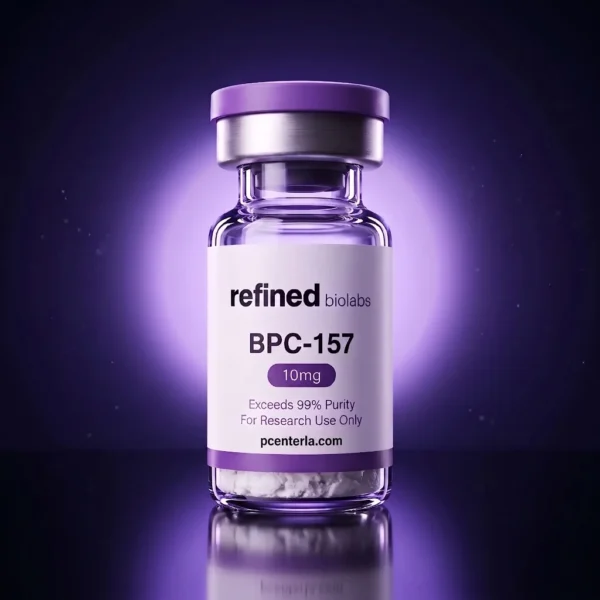
BPC-157, also known as Body Protection Compound-157 or PL 14736, is a synthetic pentadecapeptide consisting of 15 amino acids with the sequence Gly-Glu-Pro-Pro-Pro-Gly-Lys-Pro-Ala-Asp-Asp-Ala-Gly-Leu-Val. It was originally identified as a fragment of a larger protective protein present in human gastric juice and later synthesized for research purposes. With a molecular weight of approximately 1419.5 g/mol and CAS number 137525-51-0, BPC-157 is noted for its unusual stability, partly attributed to its high proline content, which helps it resist enzymatic degradation in certain experimental conditions.
In the scientific literature, BPC-157 has been extensively examined in animal and cell-culture models. Preclinical studies have reported effects on tissue repair processes, including accelerated healing in tendon, ligament, muscle, and bone injury models. Research has also explored its influence on angiogenesis through pathways involving VEGFR2, nitric oxide signaling (eNOS), and focal adhesion kinase (FAK)–paxillin interactions that support fibroblast migration and survival. Additional investigations have focused on gastrointestinal protection, such as ulcer healing and mucosal integrity in rodent models. These findings have made BPC-157 one of the most frequently studied peptides in regenerative and cytoprotective research.
It is essential to understand the current evidence landscape. The large majority of published data on BPC-157 comes from preclinical (primarily rodent) studies. Human clinical evidence remains very limited and consists mainly of small, uncontrolled pilot reports. Systematic reviews have rated the overall certainty of evidence for clinical efficacy and safety as very low. BPC-157 is not approved by the FDA or any major regulatory authority for any therapeutic use in humans. It is sold exclusively as a research chemical for laboratory and scientific investigation.
For laboratories seeking consistent material, research-grade BPC-157 is typically supplied as a white lyophilized powder in vials (commonly 5 mg or 10 mg). Reputable suppliers provide batch-specific Certificates of Analysis confirming identity (via mass spectrometry), high purity (often ≥99% by HPLC), and proper characterization. Storage recommendations generally call for refrigeration or freezing of the lyophilized form to maintain stability. Always handle research peptides according to institutional biosafety protocols and applicable regulations.
Whether your work involves angiogenesis assays, tissue-repair models, gastrointestinal pathway studies, or comparative peptide research, high-purity BPC-157 offers a well-characterized tool for advancing scientific understanding. Explore our selection of rigorously tested BPC-157 research peptides today—backed by transparent quality documentation and intended strictly for laboratory research use only. Not for human or veterinary consumption.
Reviews
There are no reviews yet.