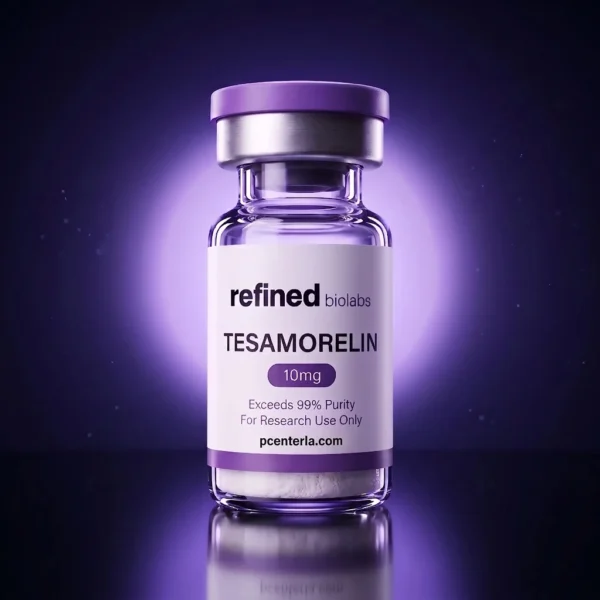
Tesamorelin is a stabilized synthetic analog of human growth hormone-releasing hormone (GHRH, also called growth hormone-releasing factor or GRF). Unlike native GHRH, which is rapidly degraded by the enzyme dipeptidyl peptidase-IV (DPP-IV), Tesamorelin incorporates a trans-3-hexenoic acid modification at the N-terminus. This structural change significantly extends its biological activity while preserving the ability to bind GHRH receptors on pituitary somatotroph cells. The result is stimulation of the body’s own natural, pulsatile growth hormone (GH) secretion, which in turn elevates insulin-like growth factor-1 (IGF-1) levels. This physiological approach differs from exogenous GH administration and underpins Tesamorelin’s preferential effects on visceral (deep abdominal) adipose tissue.
In 2010 the U.S. Food and Drug Administration approved Tesamorelin (branded as Egrifta, later reformulated as Egrifta SV and the more recent Egrifta WR) as the only medication indicated for the reduction of excess abdominal fat in HIV-infected adults with lipodystrophy—a common side effect of long-term antiretroviral therapy. Pivotal Phase 3 trials involving hundreds of patients showed mean reductions in visceral adipose tissue of approximately 15% (measured by CT scan) over 26 weeks compared with increases in the placebo groups. Secondary benefits included improvements in triglycerides, total-to-HDL cholesterol ratios, waist circumference, and patient-reported body image, with overall body weight remaining largely neutral and modest gains in lean mass observed. Additional research has explored effects on liver fat content in HIV-associated non-alcoholic fatty liver disease.
For laboratory and preclinical research, Tesamorelin is available as a high-purity lyophilized peptide. Its well-characterized mechanism—GHRH receptor agonism leading to endogenous GH/IGF-1 elevation and selective visceral fat mobilization—makes it a valuable tool for studies of body composition, metabolic regulation, lipid metabolism, and related endocrine pathways. Researchers appreciate the extensive human clinical data package supporting its activity profile, which is stronger than that of many other research peptides in the GHRH class.
When sourcing Tesamorelin for research, prioritize suppliers that provide third-party testing (typically ≥99% purity by HPLC), batch-specific Certificates of Analysis, and clear research-only labeling. Proper storage of the lyophilized powder (generally −20°C) and adherence to institutional safety and handling protocols are essential. Note that Tesamorelin is a prescription medication in its approved pharmaceutical form and is prohibited by WADA for athletic use. Research-grade material is intended exclusively for laboratory, in-vitro, and preclinical investigations and is not for human consumption or therapeutic use outside of approved medical channels.
Advance your metabolic and body-composition research with high-quality Tesamorelin. Explore our selection of laboratory-tested vials today and support rigorous scientific inquiry with material backed by transparent quality documentation. Always handle research peptides in accordance with applicable regulations and institutional guidelines.


Reviews
There are no reviews yet.