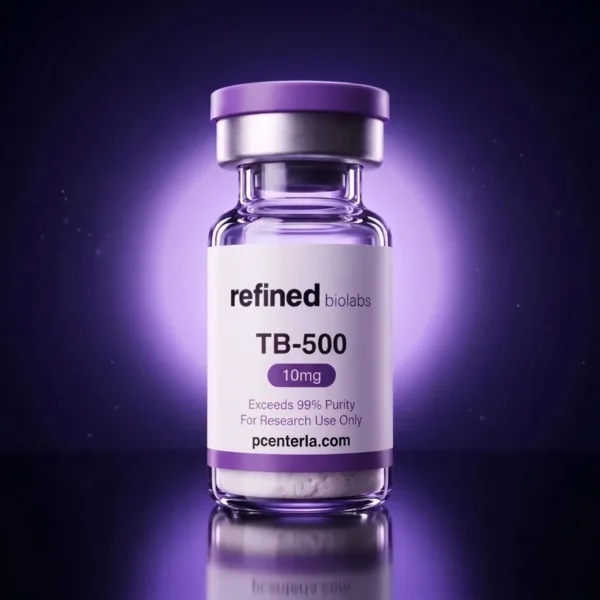
TB-500 is a synthetic peptide widely used in research settings as a fragment of thymosin beta-4 (Tβ4), a naturally occurring 43-amino-acid protein found in nearly every human cell. Specifically, most commercial research products labeled TB-500 contain the N-acetylated heptapeptide Ac-LKKTETQ, which corresponds to residues 17–23 of thymosin beta-4—the critical actin-binding domain. This short sequence is studied for its ability to influence actin polymerization, promote cell migration, and support processes linked to tissue remodeling. While full-length thymosin beta-4 has been examined in both preclinical and limited human studies (particularly in ocular and dermal wound models), the TB-500 fragment itself is primarily investigated through laboratory and animal research.
In research literature, thymosin beta-4 and its actin-binding motifs have been associated with several regenerative mechanisms. These include upregulation of cell migration to injury sites, promotion of angiogenesis (new blood vessel formation), modulation of inflammation, and support for extracellular matrix remodeling. Animal studies have reported accelerated wound closure, improved collagen organization, and enhanced recovery in models of skin, tendon, cardiac, and other soft-tissue injuries. Direct evidence specific to the TB-500 fragment remains more limited than data on the parent protein, and no large-scale human clinical trials have established its efficacy or safety for any therapeutic use. TB-500 is not approved by the FDA or any major regulatory agency for human or veterinary administration and is classified as a research chemical. It is also prohibited by WADA in sports.
For laboratories conducting studies on cytoskeletal dynamics, tissue repair pathways, or comparative peptide research, high-purity TB-500 offers a practical tool. Research-grade TB-500 is typically supplied as a lyophilized powder in sealed vials (commonly 5 mg or 10 mg), with independent HPLC verification confirming purity levels often ≥98–99%. Reputable suppliers provide batch-specific Certificates of Analysis, proper storage guidance (usually −20°C for long-term stability), and clear “for research use only” labeling. Reconstitution is performed with bacteriostatic water or other appropriate solvents under sterile laboratory conditions.
Whether your work focuses on actin-binding assays, cell migration models, wound-healing protocols in vitro or in animals, or broader regenerative biology, quality and consistency of the peptide matter. Choose TB-500 from suppliers that prioritize transparent testing, accurate identity confirmation (molecular weight ~889 Da for the fragment), and rigorous quality controls. All products are intended exclusively for laboratory research and are not for human consumption, clinical use, or veterinary application. Always follow institutional biosafety guidelines and applicable regulations when handling research peptides. Explore our selection of lab-tested TB-500 today to advance your scientific investigations into tissue repair and cellular recovery mechanisms.
Reviews
There are no reviews yet.