What Is GLOW Peptide?
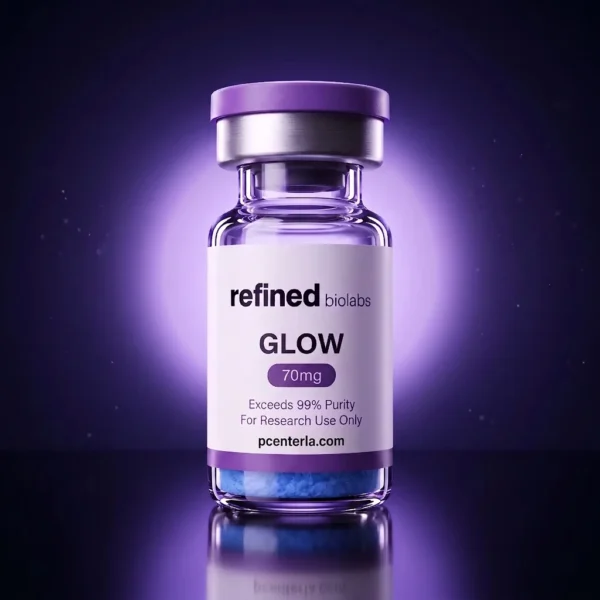
GLOW peptide is not a single molecule. It is a research-use-only blend that typically contains:
- 50 mg GHK-Cu (copper tripeptide-1)
- 10 mg BPC-157
- 10 mg TB-500
Totaling approximately 70 mg per vial. GHK-Cu makes up the majority of the mass, which is why the blend is strongly associated with skin and anti-aging research, while BPC-157 and TB-500 contribute complementary tissue-repair and cell-migration pathways studied in preclinical models.
Key Research Benefits of GLOW Peptide
Skin Rejuvenation & Collagen Production
GHK-Cu is a naturally occurring copper-binding tripeptide whose levels decline with age. Research on GHK-Cu has examined its role in supporting collagen and elastin synthesis, extracellular matrix remodeling, fibroblast activity, and overall skin density and firmness. Many researchers turn to the GLOW peptide blend specifically because of this dominant copper-peptide component.
Tissue Repair & Recovery Support
BPC-157 has been extensively studied in animal models for soft-tissue, tendon, ligament, and gastrointestinal repair pathways. TB-500 (a synthetic fragment related to thymosin beta-4) is researched for actin regulation, cell migration, and angiogenesis. Together with GHK-Cu, these components create a multi-targeted research stack that interests investigators studying comprehensive recovery and remodeling processes.
Anti-Aging & Radiance Potential
The “glow” in the name reflects the interest in visible skin quality. Improved matrix organization, better light reflection from smoother skin, and support for antioxidant pathways associated with GHK-Cu form the scientific rationale behind the anti-aging research interest in this blend.
Why Choose a High-Quality GLOW Peptide Blend?
Researchers prefer a pre-blended GLOW peptide for convenience and consistency. A standardized 50/10/10 ratio removes the need to measure three separate peptides for every experiment. When sourced from reputable suppliers that provide third-party testing and Certificates of Analysis, the GLOW peptide blend offers a reliable starting point for studies focused on skin biology, wound-related models, and recovery pathways.
GLOW Peptide vs. Individual Peptides or Other Stacks
While GHK-Cu alone is excellent for pure skin-focused research, the addition of BPC-157 and TB-500 expands the scope to include tissue-repair mechanisms. Compared with the related KLOW stack (which adds KPV), standard GLOW remains the core three-peptide option preferred by many for balanced skin + recovery research protocols.
How Researchers Typically Approach GLOW Peptide
Most research protocols involve reconstituting the lyophilized powder and administering via subcutaneous routes in controlled laboratory settings. Exact dosing, frequency, and duration vary by study design. Always follow institutional guidelines and supplier recommendations for research materials.
Ready to Explore Premium GLOW Peptide?
Whether your research focuses on collagen signaling, skin matrix remodeling, soft-tissue recovery models, or multi-peptide synergy, the GLOW-peptide blend (GHK-Cu + BPC-157 + TB-500) remains one of the most practical and popular research tools available.
Shop research-grade GLOW peptide today and experience the convenience of a precisely formulated, high-purity 70 mg blend backed by transparent testing. Elevate your skin rejuvenation and tissue recovery research with the GLOW peptide stack trusted by investigators worldwide.
Reviews
There are no reviews yet.