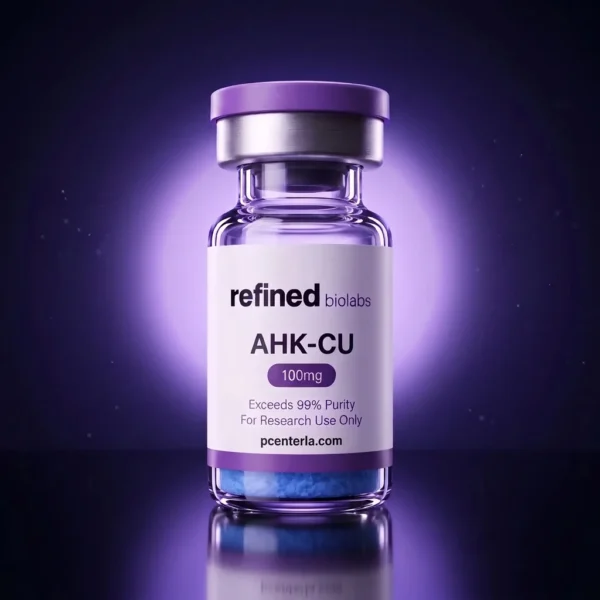
AHK-Cu, also known as Copper Tripeptide-3 or alanyl-histidyl-lysine copper, is a synthetic tripeptide-copper complex composed of the amino acids alanine, histidine, and lysine bound to a copper(II) ion. It is a close structural analog of the naturally occurring copper peptide GHK-Cu, differing only by the substitution of alanine for glycine at the first position. This small change produces a molecule of approximately 415–418 g/mol that retains the histidine-centered copper-binding motif while offering a distinct research profile focused on hair follicle biology.
The primary scientific interest in AHK-Cu stems from a 2007 laboratory study conducted at Seoul National University. In that work, AHK-Cu at picomolar to nanomolar concentrations stimulated the elongation of isolated human hair follicles maintained in organ culture and increased the proliferation of cultured human dermal papilla cells—the specialized cells at the base of the follicle that regulate the hair growth cycle. The same study observed shifts in apoptotic markers, including an elevated Bcl-2/Bax ratio and reduced cleaved caspase-3 and PARP, suggesting a supportive effect on cell survival in these models. These findings have positioned AHK-Cu as a compound of interest for researchers examining copper peptide mechanisms in scalp and skin tissue.
Unlike GHK-Cu, which has a broader and more extensive body of published research spanning wound healing, collagen modulation, and gene expression, AHK-Cu’s direct evidence remains limited to in vitro and ex vivo systems. No large-scale human clinical trials specifically evaluating AHK-Cu for hair growth or skin outcomes have been published. As a result, it is used mainly as a research chemical and as an ingredient in certain cosmetic scalp formulations. In laboratory settings, researchers explore its potential influence on dermal papilla activity, copper delivery, and related cellular pathways.
For laboratories seeking consistent material, research-grade AHK-Cu is typically supplied as a lyophilized powder in vials suitable for reconstitution and experimental use. Quality suppliers provide third-party testing (HPLC and identity confirmation), batch-specific Certificates of Analysis, and clear research-only labeling. Proper storage (generally cold and protected from light and moisture) helps maintain stability. AHK-Cu is intended exclusively for in vitro, preclinical, and laboratory research applications. It is not approved as a drug and is not intended for human or veterinary use outside of regulated cosmetic formulations where applicable.
Whether your work involves comparative studies of copper peptides, follicle organ culture models, or dermal papilla cell signaling, high-purity AHK-Cu provides a focused research tool. Choose material backed by transparent testing and documentation to support reproducible science. Explore our selection of laboratory-tested AHK-Cu and advance your investigations into copper tripeptide biology with confidence. Always follow institutional safety protocols and applicable regulations when handling research peptides.

Reviews
There are no reviews yet.